In the stillness of early morning, a thin veil of mist rises off blackwater channels, and the Okefenokee begins to stir. The low bellow of an American alligator echoes across the swamp, while a river otter slips effortlessly through the dark water, and wading birds step carefully through shallow pools. This is Okefenokee National Wildlife Refuge, the largest blackwater swamp in North America, where slow-moving waters stained dark by natural tannins from decaying vegetation create a unique, tea-colored landscape. Here, water does more than shape the environment – it sustains life itself.
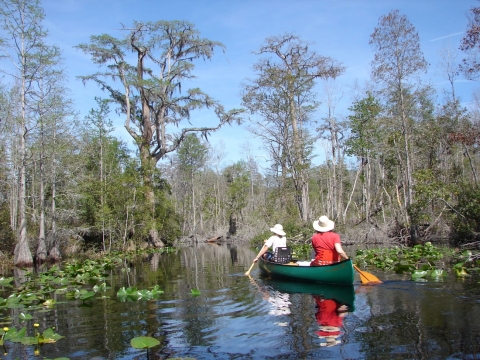
Each May, American Wetlands Month invites us to look closer at places like the Okefenokee and the essential role wetlands play in supporting wildlife, sustaining communities, and providing opportunities for people to connect with the outdoors. From improving water quality and reducing flood impacts to supporting hunting, fishing, and wildlife observation, wetlands deliver real, everyday value to the American people.
Few stories capture that value more clearly than the recovery of the wood stork. Once listed as endangered, this distinctive, long-legged wading bird depends on healthy wetlands with the right water conditions to thrive. In the Okefenokee, seasonal water patterns concentrate fish and other prey, creating ideal feeding conditions that support the species’ gradual return. Today, the wood stork’s improved status reflects what is possible when science, stewardship, and partnership come together with a shared purpose.
The Okefenokee’s importance extends well beyond its boundaries. It is recognized globally as a Wetland of International Importance under the Convention on Wetlands, an international effort focused on the conservation and sustainable use of wetlands. In the United States, the program is a voluntary, non-regulatory initiative that advances partnership-driven efforts with states, local communities, and conservation organizations.
Rather than creating new mandates, the designation recognizes conservation leadership already underway and brings partners together around shared goals. Because nominations are locally initiated and broadly supported, designations reflect strong consensus and showcase places that already meet high conservation standards. In doing so, the program elevates existing stewardship while delivering meaningful benefits to the American people, including supporting outdoor recreation traditions such as hunting and fishing and contributing to water resource management through flood protection and water security for communities.
The designation also contributes to local economies through recreation-based jobs and tourism spending, as visitors from across the country and around the world travel to experience these special places and spend money in surrounding communities on lodging, food, transportation, retail, guides, and more.
That recognition reflects work already happening on the ground every day. The U.S. Fish and Wildlife Service works alongside states, Tribes, local communities, and partners to conserve and manage wetlands like the Okefenokee using the best available science and a commitment to practical, results-driven conservation.
Conservation success stories like the wood stork do not happen by accident. They are the result of sustained effort, strong partnerships, and a shared commitment to supporting both people and wildlife. At the Okefenokee National Wildlife Refuge, that support is on full display, from the quiet movement of water through cypress and peat along a designated National Water Trail that connects people to these wetlands, to the return of species that depend on it.
This American Wetlands Month, the Okefenokee reminds us that when wetlands are conserved, the benefits ripple outward—across ecosystems, across communities, and across generations.