Written By

The Florida salt marsh salt marsh
Salt marshes are found in tidal areas near the coast, where freshwater mixes with saltwater.
Learn more about salt marsh vole is one of North America’s most elusive mammals. Found only in a short stretch of Florida’s Big Bend, the vole faces growing threats from stronger hurricanes, changing water levels and changing plant communities. Researchers from the University of Florida, with funding and on‑the‑ground field support from the Coastal Program, are working on species recovery goals to better understand this endangered species and restore the unique marsh it depends on.
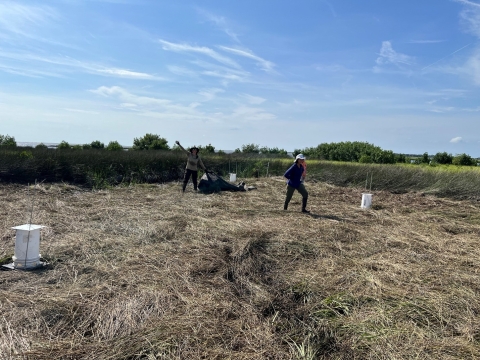
In the summer of 2023, the team tested small-scale habitat treatments that mimic natural disturbance in the marsh. The first treatment mimicked herbivory and thinned dense clumps of black needle rush to open space for new growth of early successional species preferred by the vole. The second treatment piled dead vegetation to mimic organic debris left behind by storms. These treatments shifted plant communities in ways that benefited vole recovery. Disturbance‑tolerant salt marsh cordgrasses increased, while thick flowering rushes thinned out. These management techniques support vole habitat and strengthen overall marsh resilience.
During the post-treatment monitoring, Hurricane’s Idalia (2023) and Helene (2024) impacted the project area and the voles’ entire range. The camera traps with more than 13,000 hours of data showed steep declines in small mammals. Most concerning, Florida salt marsh voles disappeared entirely from detections after Hurricane Idalia. For months, researchers were unsure whether any voles had survived.
When the voles went undetected, the Florida Fish and Wildlife Conservation Commission (FWC) stepped in as a key partner. With Conserve Wildlife Tag Grant funds, the team expanded its search across the marshlands. Researchers refined habitat maps, trained new staff, deployed additional camera traps, and used an airboat to reach remote islands where voles might still persist.
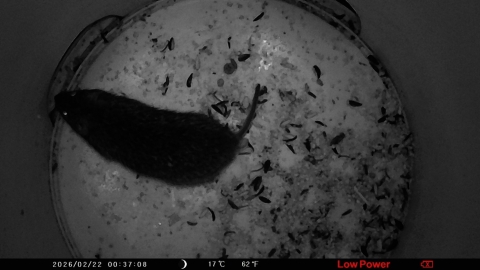
Excitingly, in February 2026, a camera trap captured the first confirmed detection of a Florida salt marsh vole since the hurricanes. This single observation is a major sign of hope and highlights the power of coordinated conservation work.
The team will continue surveying high‑priority areas throughout 2026 while preparing scientific publications on vegetation change and hurricane impacts. This work supports the recovery of the Florida salt marsh vole while also strengthening the resilience of Florida’s coastal marshes, which protect shorelines, support wildlife and fisheries, and sustain coastal communities.