Written By


To celebrate America's 250th birthday, we at the U.S. Fish and Wildlife Service are highlighting the incredible wildlife that calls this beautiful country home. From American icons to subtle specialists, join us as we highlight seven species each week: one species for each of the 250 days leading up to America's 250th birthday.
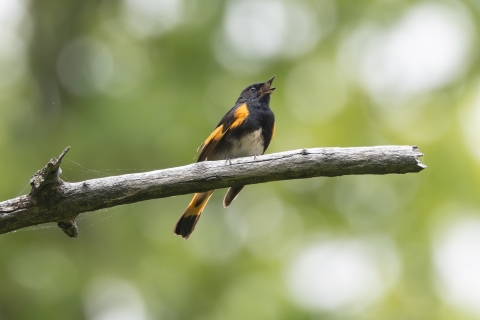
American redstart (Setophaga ruticilla)
The American redstart is a striking warbler with vivid coloring and a flashy tail-fanning display. Males have bold black feathers with bright orange patches and females have softer yellow highlights. These birds breed across much of the east, southern Canada and parts of the west.
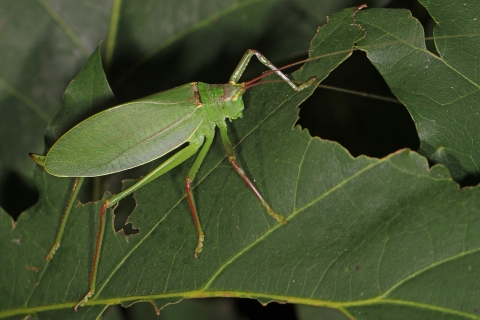
Common true katydid (Pterophylla camellifolia)
The common true katydid is a large, leaf-shaped insect known for its vibrant green color and the male's unmistakable nighttime calls. This time of year, katydids are singing across the east, especially in the southeast.
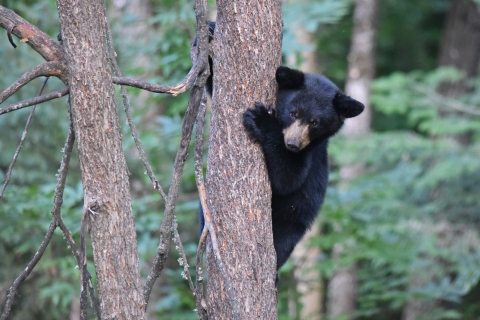
American black bear (Ursus americanus)
The American black bear is the most widespread bear in North America, found in forests, swamps and mountains from coast to coast. Despite their name, their color may vary from black and brown to cinnamon or even blond! This time of year, black bears are foraging and searching for mates.
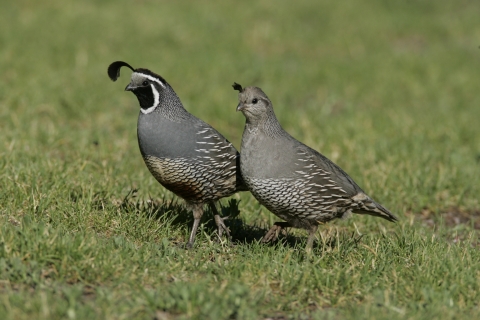
California quail (Callipepla californica)
The California quail is a ground-dwelling bird easily recognized by its forward-curving topknot and scaled plumage. Found along the West Coast, these birds often spend time in groups. This nesting season watch for quail families in tall grasses and brush.
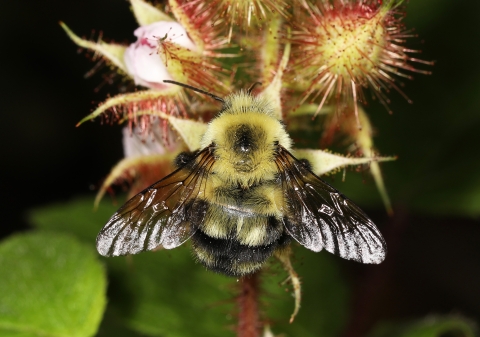
American bumble bee (Bombus pensylvanicus)
The American bumble bee is a large, fuzzy pollinator with a mostly black body and bright yellow thorax. This time of year, queens remain inside the nest while worker bees forage for nectar and pollen to feed developing larvae. Watch for them visiting wildflowers including coneflowers and milkweeds.
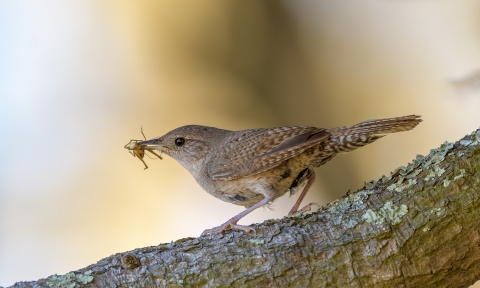
Northern house wren (Troglodytes aedon)
The northern house wren can be found in southern Canada, across most of the U.S. and parts of Mexico in the summer. Despite their small size, they're bold and fiercely territorial. This time of year, they're nesting in cavities or nest boxes and working steady to feed young a steady diet of insects and spiders.
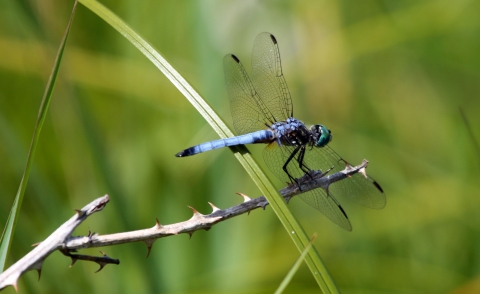
Blue dasher (Pachydiplax longipennis)
The blue dasher is a small, striking dragonfly often found near ponds, lakes and wetlands across much of the country. Watch for these fierce aerial predators patrolling over sunny waters in search of flying insects and mates.