Written By

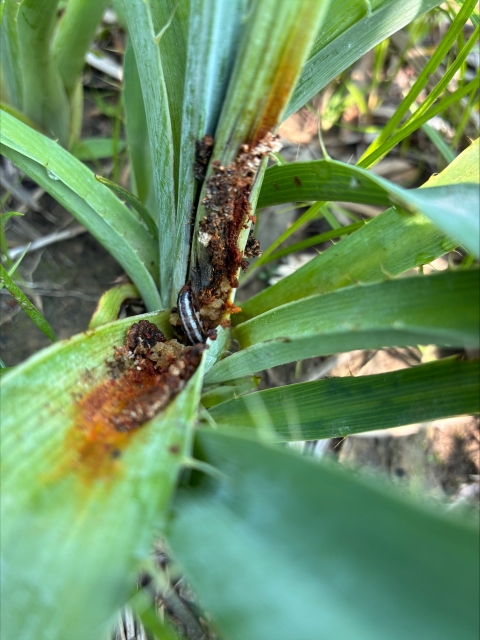
Don’t let its small size fool you—the rattlesnake-master borer moth is a key indicator of healthy native grasslands—habitats that have dwindled dramatically over the past century across Kentucky. This at-risk species depends entirely on one host plant, the rattlesnake master (Eryngium yuccifolium), a sun-loving perennial found in barrens, prairies, glades and other open grassland habitats.
Today, only two known populations of the moth remain in Kentucky. One population persists on private lands managed in partnership among The Nature Conservancy (TNC), the Office of Kentucky Nature Preserves (OKNP), volunteers, and other cooperators.
Partners Unite to Restore a Vanishing Habitat
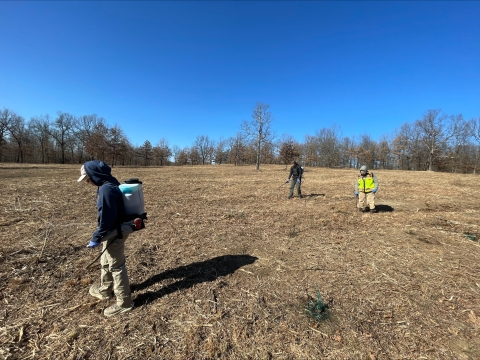
Recently, the U.S. Fish and Wildlife Service’s Partners for Fish and Wildlife (PFW) Program joined forces with TNC and OKNP to tackle a growing threat: woody encroachment that threatened the site’s remnant sandstone–limestone barrens and the moth’s only host plant.
To restore the system’s open structure and improve habitat quality, partners applied a suite of science-based restoration practices including:
- Mastication to mulch overgrown vegetation
- Hand-thinning of encroaching trees and shrubs
- Targeted invasive species invasive species
An invasive species is any plant or animal that has spread or been introduced into a new area where they are, or could, cause harm to the environment, economy, or human, animal, or plant health. Their unwelcome presence can destroy ecosystems and cost millions of dollars.
Learn more about invasive species treatments - A restored rotation of periodic prescribed fire
These actions created dramatic results. As woody vegetation receded, sunlight once again reached the soil surface, leading to greater stem count of rattlesnake master and an overall boost in biodiversity at the site.

Fire as a Turning Point
The most compelling evidence of success comes from the moth itself. Ongoing monitoring shows that the rattlesnake-master borer moth is now most abundant in areas that receive periodic prescribed fire applied at carefully planned intervals.
In recent years, land managers have incorporated low-intensity growing-season burns, which are timed after larvae have safely tunneled into the plant’s root system. This approach minimizes risk to the species while maintaining the open, fire-dependent conditions that the plant—and the moth—need.

Proactive Conservation to Prevent Future Listing
The rattlesnake-master borer moth was previously evaluated for potential listing under the Endangered Species Act. By investing early in voluntary habitat restoration and targeted management, the PFW Program and its partners are helping to enhance the species' chances of survival with a goal to reduce the likelihood it will require federal protection in the future.