As part of the Flags Across America initiative for America’s 250th anniversary, the U.S. Fish and Wildlife Service is sharing stories from the places where our commemorative flags have traveled. From historic hatcheries to vibrant refuges, each stop celebrates conservation as an enduring American value. Join us as we highlight the lands, waters, and wildlife that connect our nation’s past, present, and future.
In the high desert of western Nevada, beneath the shadow of the Sierra Nevada Mountains, Lahontan National Fish Hatchery Complex stands at the heart of one of the most remarkable native fish recovery efforts in the country. There, the flags were welcomed into the home of the iconic Pilot Peak strain Lahontan cutthroat trout.
A Species Once Thought Lost
The Lahontan cutthroat trout is the largest cutthroat trout in the world, capable of reaching enormous sizes in the ancient lakes of the Great Basin. Once abundant in Lake Tahoe, the Truckee River, and Pyramid Lake, they shaped ecosystems and fueled tribal culture in the American West. By the 1940s, they were gone from their home waters driven out by habitat loss, water diversion, and introduced species. The fish that once defined the region survived only in memory, historic photos, and stories.
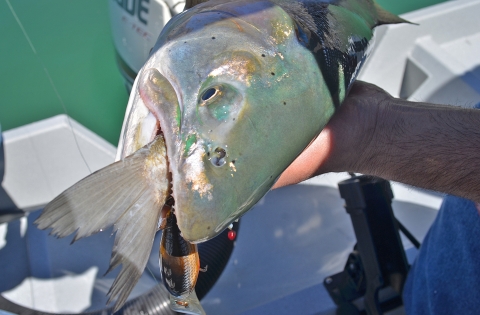
Then, decades later, a miracle surfaced: a small population of cutthroat trout in the Pilot Peak Mountains carried the exact genetics of the original giant Pyramid Lake fish. Against all odds, the lineage had survived in isolation. Today, this Pilot Peak strain forms the backbone of Lahontan cutthroat trout recovery efforts for the Lahontan National Fish Hatchery Complex.
The Flag’s Visit
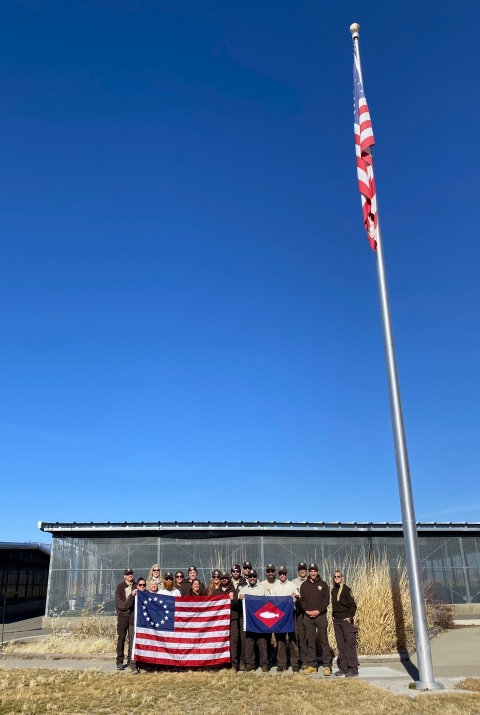
When the commemorative flags arrived at Lahontan National Fish Hatchery Complex, staff shared the story of how these trout were rediscovered, safeguarded, and raised through one of the West’s most successful native fish recovery programs. They also highlighted the intensive work required to propagate this iconic species, maintaining a large broodstock broodstock
The reproductively mature adults in a population that breed (or spawn) and produce more individuals (offspring or progeny).
Learn more about broodstock and rearing fish from egg to catchable size for recreation and recovery.
But the work does not stop at the hatchery door.
The complex is an integrated team that manages the Lahontan cutthroat trout from the hatchery Pilot Peak broodstock to their reintroduction waters in Lake Tahoe, Truckee River, and Pyramid Lake basins. The fishery management work covers a wide array of science and collaboration with tribal and other local partners to evaluate stream health and spawning habitat; conduct population surveys and studies; and deploy nets, boats, and underwater equipment to monitor lakes and other recovery waters. Their efforts reconnect fragmented habitats, open migration pathways, and support wild reproduction in places where native trout have not spawned for generations.
Visitors who come to the hatchery or meet our field crews encounter more than a conservation program. They encounter a living story about the American West: about resilience, restoration, and the belief that a species lost can indeed return.
The Lahontan National Fish Hatchery Complex embodies what the Flags Across America initiative celebrates: places where past and present meet, where dedication fuels recovery, and where conservation is an enduring American value.
Next up, we follow the flags to Willow Beach National Fish Hatchery, which stocks rainbow trout for angling and endangered native fish for recovery. Stay tuned for the next chapter on this historic tour!