Written By

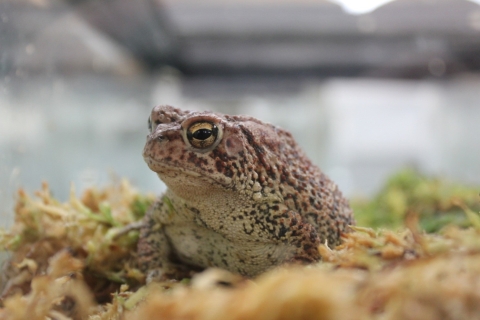
The Houston toad, a federally endangered species found only in the Lost Pines and Post Oak Savannah ecoregions of east-central Texas, continues to face growing threats to its survival. Habitat loss—driven by decades of fire suppression, catastrophic wildfires, encroaching brush species like yaupon holly and eastern red cedar, and the spread of non-native, mat-forming grasses—has fragmented the landscape the species depends on. When left unmanaged, these woody thickets create dense, impenetrable barriers that prevent Houston toads from moving freely between foraging areas and breeding ponds.
Restoring Habitat, One Property at a Time
Restoring this habitat is both expensive and labor-intensive, often requiring heavy equipment and follow-up treatments. Yet for nearly two decades, staff from the U.S. Fish and Wildlife Service’s (Service) Partners for Fish and Wildlife (PFW) Program, Texas Parks and Wildlife Department (TPWD), Texas A&M Forest Service, local universities, and other partners have been steadily reversing that trend—one property, one project at a time.
The goal is to treat and restore brush-infested understories to allow for Houston toads to one day reclaim their lost territory. Typical restoration work begins with mechanical mulching of thickets to open the understory, followed by targeted herbicide treatment to control resprouting brush. These actions give native bunchgrasses and forbs the opportunity to return, creating a healthy, open understory that Houston toads can safely navigate.
This long-term investment is paying off. On a private property in Bastrop County—where the PFW Program and TPWD provided technical and financial assistance to restore habitat for the species—a single male Houston toad was recently detected. It is a small but meaningful sign of progress: habitat that had been degraded and unusable is once again supporting the species it was restored for.


Recovery Depends on Partnerships
Because most of the toad’s remaining range occurs on private lands, full recovery will depend on strong partnerships with landowners. The PFW Program in Texas continues to work across the species’ range with voluntary private landowners who are committed to habitat restoration and long-term stewardship. Meanwhile, partners at the Houston Zoo, Dallas–Fort Worth Zoo, and the Service’s San Marcos Aquatic Research Center are bolstering recovery efforts through captive breeding and reintroduction. Together, the combination of dirt and lab work gives the Houston toad its best chance of recovery.
We are deeply grateful to the dedicated private landowners and conservation partners who make Houston toad recovery possible. Their commitment is helping this rare species reclaim its place on the landscape and offering hope that its familiar trill will continue to echo across the Lost Pines for generations to come.