Draft compatibility determinations (CD) for two outdoor recreation activities, boating and biking on Theodore Roosevelt National Wildlife Refuge Complex (Complex) Refuges, are now available for public review and comment for 14 calendar days from May 28, 2026, to June 11, 2026. These activities provide a means of travel and participation in all wildlife-dependent recreation on the nine refuges including hunting and fishing, and wildlife observation.
The documents are available for review in the library section of this webpage. You can find the library tab on the left side of the screen, towards the bottom of the menu. Please let us know if you need the documents in an alternative format. Please submit any comments by June 11, 2026, to Brett Moule, Project Leader, Theodore Roosevelt NWR Complex by email at [email protected]. Concerns expressed during the public comment period may be addressed in the final CD.
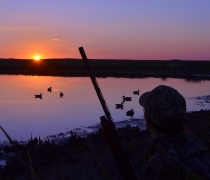
The FWS is seeking public review and comment on the proposed opening or expansion of hunting and/or fishing. The public is invited to review the draft documents, including draft plan(s), compatibility determination(s) as appropriate, and environmental compliance documentation. The draft documents are available through the Federal Register docket number: FWS–HQ–NWRS–2026–1223.
The comment period on the proposed hunting and sport fishing regulations across Service-managed lands and waters will stay open for 30-days from May 27 through June 26, 2026. Please submit your comments directly through the Federal Register.
The comment period on the Environmental Assessment for actions at this field station will stay open for 30 days from May 27 through June 27, 2026. Please submit your comments via email to [email protected] with the name of the refuge or hatchery in the subject line.
Visit Us

National wildlife refuges offer us all a chance to unplug from the stresses of daily life and reconnect with our natural surroundings.
Seasons, life cycles and migrating animals make each visit to the refuge a new experience. There are a multitude of opportunities such as wildlife observation, interpretative programs, hunting and fishing. People of all abilities can explore the refuge trails, which include two fully accessible trails leading to observation decks.
Location and Contact Information
About Us
The bottomland hardwood habitat of Bayou Cocodrie National Wildlife Refuge supports a variety of plants and animals, including the Louisiana black bear, which until 2016 was on the endangered species list. The refuge includes some of the least disturbed bottomland hardwood forests in the Southeast and significantly contributes to the biological diversity in the region. Because of its large contiguous stand of bottomland hardwood forest, the refuge was designated as critical habitat and serves as a corridor for the Louisiana black bear between Tensas River National Wildlife Refuge and the state of Louisiana’s Red River Wildlife Management Area.
What We Do
Wildlife conservation is at the heart of the National Wildlife Refuge System. It drives everything on U.S. Fish and Wildlife Service lands and waters managed within the Refuge System, from the purposes for which a national wildlife refuge national wildlife refuge
A national wildlife refuge is typically a contiguous area of land and water managed by the U.S. Fish and Wildlife Service for the conservation and, where appropriate, restoration of fish, wildlife and plant resources and their habitats for the benefit of present and future generations of Americans.
Learn more about national wildlife refuge is established to the recreational activities offered to the resource management tools used. Using conservation best practices, the Refuge System manages Service lands and waters to help ensure the survival of native wildlife species.
Our Organization

Our Species

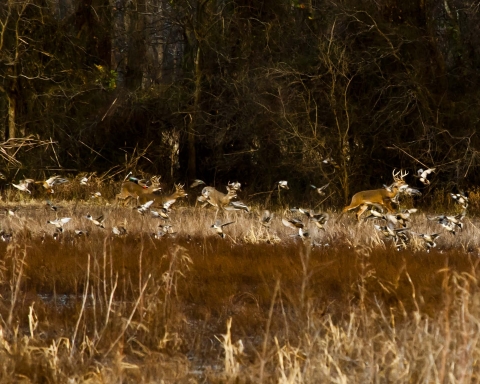
Bayou Cocodrie National Wildlife Refuge's habitat diversity results in a wide variety of wildlife living on and using the refuge including game mammals, waterfowl, neotropical songbirds, and the Louisiana black bear, which until 2016 was on the endangered species list.