U.S. Fish and Wildlife Service Releases Draft Compatibility Determinations and Environmental Assessments for Congressman Lester Wolff Oyster Bay National Wildlife Refuge
Compatibility Determination Overview
A compatibility determination is necessary to fulfill the agency’s responsibilities under the Refuge Improvement Act regarding use of a refuge. Pursuant to the National Wildlife Refuge System Administration Act of 1966 as amended by the National Wildlife Refuge System Improvement Act of 1997, 16 U.S.C. 668dd-668ee (Refuge Administration Act), compatibility must be determined for all proposed and existing refuge uses.
A compatibility determination is a written determination signed and dated by the refuge manager and regional chief signifying that a proposed or existing use of a national wildlife refuge national wildlife refuge
A national wildlife refuge is typically a contiguous area of land and water managed by the U.S. Fish and Wildlife Service for the conservation and, where appropriate, restoration of fish, wildlife and plant resources and their habitats for the benefit of present and future generations of Americans.
Learn more about national wildlife refuge is a compatible use or is not a compatible use. The Director has delegated this authority. A compatible use is a proposed or existing wildlife-dependent recreational use or any other use of a national wildlife refuge that, based on sound professional judgment, will not materially interfere with or detract from the fulfillment of the National Wildlife Refuge System mission or the purposes of the national wildlife refuge (603 FW 2.6 B).
We require a compatibility determination for all refuge uses as defined by the term "refuge use." A refuge use is defined as a recreational use (including refuge actions associated with a recreational use or other general public use), refuge management economic activity, or other use of a national wildlife refuge by the public or other non-National Wildlife Refuge System entity (603 FWS 2.6 Q). Wildlife-dependent recreational uses must be reevaluated every 15 years while all other uses must be reevaluated every 10 years (603 FW 2.11 H.1 and H.2).
Congressman Lester Wolff Oyster Bay NWR Context
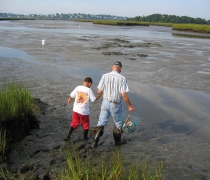
Shellfishing has occurred in the Town of Oyster Bay (Long Island, New York) before and after the 1968 establishment of Congressman Lester Wolff Oyster Bay National Wildlife Refuge. The Town of Oyster Bay manages a shellfish program that includes aquaculture and recreational and commercial shellfish harvest on and off the refuge. Under a 2024 settlement agreement, the Service committed to reevaluate whether shellfishing-related activities on the refuge are compatible under policy.
Recreational shellfishing is a wildlife-dependent recreational use; under policy, it must be found not tomaterially interfere with or detract from the fulfillment of the National Wildlife Refuge System mission or the purposes of the national wildlife refuge (603 FW 2.6 B).
Commercial shellfishing and aquaculture are considered a “refuge management economic activity” (603 FW 2.6 N), which is “a refuge management activity on a national wildlife refuge that results in generation of a commodity which is or can be sold for income or revenue or traded for goods or services.” Under 50 CFR 29.1, economic uses will only be authorized if the Service determines that “the use contributes to the achievement of the national wildlife refuge’s purposes or the National Wildlife Refuge System mission.”
The refuge’s purpose is “…for use as an inviolate sanctuary, or for any other management purpose, for migratory birds…” (Migratory Bird Conservation Act, as amended [16 U.S.C. 715-715d, 715e, 715f-715r]). The mission of the National Wildlife Refuge System is to administer a national network of lands and waters for the conservation, management, and where appropriate, restoration of the fish, wildlife, and plant resources and their habitats within the United States for the benefit of present and future generations of Americans (Pub. L. 105-57; 111 Stat. 1252).
Submitting a Public Comment
The draft documents are open for public comment from April 20 to May 20, 2026. Comments can be submitted via email to [email protected]. A hard copy of this document will be posted at the refuge complex headquarters located at 340 Smith Road, Shirley, NY 11967. Please contact the refuge manager if you need the documents in an alternative format.
FAQ
What is the action taking place?
The U.S. Fish and Wildlife Service is opening a 30-day public comment period (April 20 to May 20) for the draft compatibility determinations and associated draft environmental assessments for recreational shellfishing, commercial shellfishing, and aquaculture at Congressman Lester Wolff Oyster Bay National Wildlife Refuge.
Where is the action taking place?
The uses occur within the Congressman Lester Wolff Oyster Bay National Wildlife Refuge which is located within the Town of Oyster Bay (Long Island, New York). The refuge includes portions of the Oyster Bay and Cold Spring Harbor estuary including Oyster Bay, Cold Spring Harbor, Mill Neck Creek and Frost Creek.
Why is the action being taken?
Shellfishing has occurred in the Town of Oyster Bay since before and after the 1968 establishment of Congressman Lester Wolff Oyster Bay National Wildlife Refuge. The Town of Oyster Bay manages a shellfish program that includes aquaculture and recreational and commercial shellfish harvest on and off the refuge. Under a 2024 settlement agreement, the Service committed to reevaluate whether shellfishing-related activities on the refuge are compatible under policy.
Has the refuge considered prohibiting shellfishing?
Shellfishing has been ongoing in the Town of Oyster Bay since before the refuge was established. When the Town of Oyster Bay donated land to the Service in 1968, the deed language reserved rights for the town to issue leases, agreements and permits for shellfishing “provided that…such leases, agreements, renewals, and permits are not incompatible with the use of such lands for a migratory bird refuge, and fish and wildlife purposes.” Prohibiting shellfishing would require the Service to find that these uses are not compatible with the refuge purpose or the mission of the Refuge System.
The Service considered alternatives that prohibit shellfishing on the refuge during its evaluation under the National Environmental Policy Act. Recreational shellfishing is considered low impact. Carefully managed, non-mechanized commercial shellfish harvesting in high-density areas is unlikely to cause lasting harm to estuary’s ecosystem due to natural sediment dynamics and species resilience, and the associated aquaculture is anticipated to provide long-term benefits to wildlife and habitats, including increased shellfish populations, restored habitat, improved water quality, reduced algal blooms, and strengthened shorelines. The Service’s draft determinations conclude that shellfishing and aquaculture, when closely monitored and managed in accordance with state laws and regulations, stipulations, and permit conditions, will contribute to the achievement of the refuge purpose and the Refuge System mission. The Service will consider public and partner input as it makes a final decision on whether shellfishing and aquaculture at the refuge is compatible with its conservation purpose and mission.
What impact will the shellfishing and aquaculture have on the refuge wildlife?
The Service expects that aquaculture, through the town’s shellfish restoration program, will recover oyster reefs and clam beds and lead to other benefits including habitat for invertebrates and fish, improved water quality and clarity, and increased food sources for other wildlife. Disturbance of shorebirds, waterfowl and other wildlife from shellfishing and occasional aquaculture seeding is not anticipated to have significant adverse effects. The Service evaluated the impacts of recreational, commercial non-mechanical (by hand or hand tools), and commercial mechanical (hydraulic and mechanized dredging) shellfish harvest methods. However, town code does not currently allow commercial mechanical harvest for shellfish in the estuary, and the draft determinations stipulate that mechanical shellfishing would be prohibited on the refuge. This kind of mechanical shellfishing appears to result in fundamentally more severe impacts than recreational or non-mechanical shellfishing via abrasion and excavation of the seabed, removal of shellfish, turbidity and sedimentation, and possible injury and mortality of some species. The severity and scale of impacts from non-mechanized harvest methods (either recreational or commercial) are anticipated to be minor in comparison to the impacts from mechanized harvest methods. Additionally, impacts resulting from the removal of shellfish are intended to be offset by the town’s restoration efforts. Under the preferred alternative, the Service would coordinate with the town on a monitoring program to confirm the success of the restoration program, ensure non-mechanical shellfishing does not reverse the benefits of aquaculture to fish and wildlife, and to ensure that the use remains compatible.
What impact will the shellfishing and aquaculture have on visitors?
The Congressman Lester Wolff Oyster Bay National Wildlife Refuge receives the greatest amount of public use of any refuge on Long Island. The refuge offers numerous recreational opportunities for visitors including canoeing, kayaking, boating, fin fishing, and wildlife observation and photography. All activities would continue under the alternatives considered, and the Service is not aware of conflicts between shellfish harvesters and other visitors.
Is the refuge opening to commercial uses to generate revenue for the refuge?
No. The Service can charge a modest fee to process applications for special use permits for commercial operators, but it does not receive funding from commercial harvest and aquaculture. The Service would require commercial operators to obtain a refuge special use permit after appropriate permits from the town and the state are secured. Special use permits are necessary for commercial activities occurring on a refuge. Special use permits would not be required of recreational harvesters or the town or town-authorized agents conducting shellfishing or aquaculture activities.
What are the guidelines around shellfishing on the refuge? Do I need a license?
The Town of Oyster Bay holds the rights to shellfish harvesting including issuing leases, agreements and permits for recreational and commercial shellfishing within the refuge. In coordination with the Serivce, the Town of Oyster Bay and the State of New York regulate and permit any shellfishing taking place within the refuge, including where shellfishing can take place, where access locations are, and what type of gear is allowable for harvest. The Town of Oyster Bay requires residency within the town as one condition of permit issuance.
For additional information on permit eligibility and requirements, shellfishing guidelines, and to apply for permits, please contact the Town of Oyster Bay Clerk’s office.
The Service would require commercial operators to obtain a refuge special use permit after appropriate permits from the town and the state are secured. Special use permits are necessary for commercial activities occurring on a refuge. For more information on applying for a special use permit for commercial shellfishing on the refuge please email [email protected].
Where can I read the draft documents?
Digital copies of the draft compatibility determinations and environmental assessments can be accessed by visiting our online library here. If you require this information in a different format, please contact the Congressman Lester Wolff Oyster Bay National Wildlife Refuge at [email protected].
Hard copies of these documents are also available at:
- Refuge headquarters at Wertheim National Wildlife Refuge, located at 340 Smith Road, Shirley, NY 11967.
Visit Us
Plan Your Visit

The Congressman Lester Wolff Oyster Bay National Wildlife Refuge is located on the north shore of Long Island in eastern Nassau County in the Town of Oyster Bay. It is 20 miles east of New York City and 5 miles west of Target Rock National Wildlife Refuge. The major refuge holdings are in Oyster Bay Harbor and the western portion of Cold Spring Harbor. The waters of Oyster Bay surround Sagamore Hill National Historic Site, home of Theodore Roosevelt, the founder of the first national wildlife refuge national wildlife refuge
A national wildlife refuge is typically a contiguous area of land and water managed by the U.S. Fish and Wildlife Service for the conservation and, where appropriate, restoration of fish, wildlife and plant resources and their habitats for the benefit of present and future generations of Americans.
Learn more about national wildlife refuge .
Know Before You Go
The Congressman Lester Wolff Oyster Bay National Wildlife Refuge is located on the north shore of eastern Nassau County and is only accessible by boat. This 3,209-acre area includes bay, salt marsh salt marsh
Salt marshes are found in tidal areas near the coast, where freshwater mixes with saltwater.
Learn more about salt marsh and freshwater wetlands, and is especially important for wintering waterfowl and a variety of waterbirds. The refuge waters are open 24 hours a day. Contact the Town of Oyster Bay for mooring and boat launch information.
Location and Contact Information
About Us
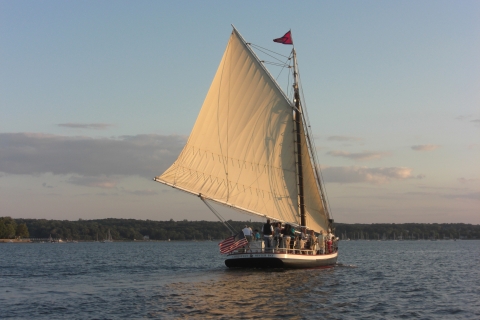
The Congressman Lester Wolff Oyster Bay National Wildlife Refuge was donated to the Service by the Town of Oyster Bay in 1968 as a habitat for migratory birds, particularly wintering waterfowl. The refuge is unique in the System, serving as a marine refuge rather than the more traditional terrestrial refuge; it comprises the waters and marshes of Oyster Bay and Cold Spring harbors. This refuge is open to the public.
The refuge is located on the north shore of Long Island in eastern Nassau County. This 3,209-acre refuge includes subtidal (bay bottom to mean high tide line) habitats, saltmarsh and a freshwater pond. The refuge is the largest refuge in the Long Island National Wildlife Refuge Complex and receives the most public use of all the refuges. The state of New York designated this refuge as a significant coastal fish and wildlife habitat. The refuge is especially important for wintering waterfowl such as black ducks, greater scaup, bufflehead, canvasback and long-tailed ducks. A variety of other waterbirds including shorebirds, terns and cormorants also use the refuge. Other marine organisms common to the refuge include northern diamondback terrapins, harbor seals, sea turtles, finfish and shellfish. Management activities include wetland restoration and protection of the natural shoreline and vegetation. Fishing (Town of Oyster Bay permits required for shell fishing), wildlife observation, photography and environmental education are approved recreational uses on the refuge.
Aquatic Habitats
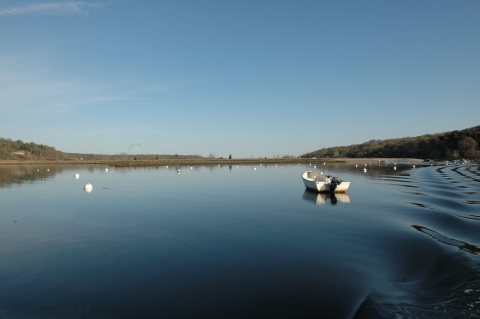
Congressman Lester Wolff Oyster Bay National Wildlife Refuge consists of 3,204 acres of bay bottom, salt marsh salt marsh
Salt marshes are found in tidal areas near the coast, where freshwater mixes with saltwater.
Learn more about salt marsh , and a small freshwater wetland. It is managed principally for use by migratory waterfowl and other waterbirds. It is also one of the few bay-bottom refuges owned and managed by the U.S. Fish and Wildlife Service. The refuge is located off Long Island Sound, and the sheltered nature of the bay makes it extremely attractive as winter habitat for a variety of waterfowl species, especially diving ducks.
The State of New York has designated the Oyster Bay area as a Significant Coastal Fish and Wildlife Habitat. Marine wildlife common to the refuge includes harbor seals, diamondback terrapins, and several species of sea turtles. Shellfish and finfish are abundant at Oyster Bay. The bay supports the only commercial oyster farm aquaculture operation remaining on Long Island, and an estimated 90 percent of the commercial oysters in New York originate from areas associated with the refuge.
Tours
Points of Interest

The Congressman Lester Wolff Oyster Bay National Wildlife Refuge was donated to the Service by the Town of Oyster Bay in 1968 as a habitat for migratory birds, particularly wintering waterfowl. The refuge, totaling 3,204 acres from the bay bottom up to mean high water, is located on the north shore of Long Island. The refuge is unique in the National Wildlife Refuge System, serving as a marine refuge rather than the more traditional terrestrial refuge; it comprises the waters and marshes of Oyster Bay and Cold Spring harbors. This refuge is open to the public.
What We Do
Refuges deploy a host of scientifically sound management tools to address biological challenges. These tools span active water management to wilderness character monitoring, all aimed at ensuring a balanced conservation approach to benefit both wildlife and people. At this field station our conservation tool box includes:
Invasive Species

Refuge staff are founding members of the Long Island Invasive Species Management Area. Networking with other members and attending periodic public meetings has helped us realize the most problematic species, develop mapping standards, prioritize treatment regimens and prepare outreach materials.
Water chestnut was the main invasive species invasive species
An invasive species is any plant or animal that has spread or been introduced into a new area where they are, or could, cause harm to the environment, economy, or human, animal, or plant health. Their unwelcome presence can destroy ecosystems and cost millions of dollars.
Learn more about invasive species within Mill Pond. After years of hand pulling by refuge staff and volunteers, the pond is now free of this invasive plant.
Our Species
Waterfowl

Oyster Bay has the greatest winter waterfowl use of any of the Long Island national wildlife refuges. The numbers of waterfowl using Oyster Bay are lowest from May through August, and start to increase in September and October. Puddle ducks such as black ducks, gadwall, and mallards start migrating to the refuge in early autumn, and their diversity begins to increase in November. Waterfowl numbers peak and remain high from December through March, then decline in April.
The New York Department of State has singled out Oyster Bay as having the greatest concentration of waterfowl on Long Island’s north shore.
The three waterfowl species that most commonly use the refuge in winter include the greater scaup, bufflehead, and black duck. Those species compose approximately 85 percent of all ducks using the refuge. Greater scaup compose more than half; bufflehead make up 20 percent; and black duck, the most common puddle duck species, close to 10 percent.
Waterfowl use is not uniform across the refuge. The Bayville, Cold Spring Harbor, and Mill Neck Creek areas support in excess of 80 percent of that use. Bayville alone accounts for nearly half. The majority of the greater scaup and bufflehead on the refuge use its Bayville and Cold Spring Harbor sections, while the Mill Neck Creek section had the greatest use by black duck and canvasback.
Northern Diamondback Terrapin
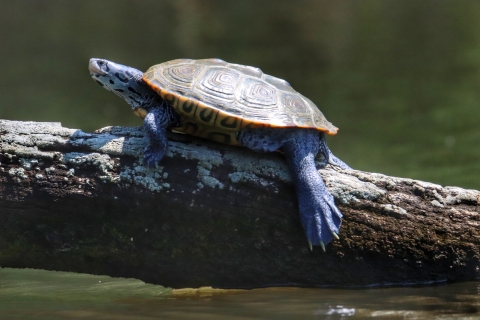
The northern diamondback terrapin is common at Oyster Bay, particularly in the Frost Creek and Mill Neck Creek sections. The refuge is considered to have one of the largest populations of diamondback terrapins on Long Island.