USFWS Clearance to Proceed with Federally-Insured Loan and Grant Project Requests

This guidance and clearance letter is provided to fulfill the ESA’s statutory obligations in a timely and consistent manner, and to assist Federal agencies, State and local governments, and consultants in addressing Section 7 Section 7
Section 7 Consultation The Endangered Species Act (ESA) directs all Federal agencies to work to conserve endangered and threatened species and to use their authorities to further the purposes of the Act. Section 7 of the Act, called "Interagency Cooperation," is the mechanism by which Federal agencies ensure the actions they take, including those they fund or authorize, do not jeopardize the existence of any listed species.

Learn more about Section 7
and National Environmental Policy Act (NEPA) environmental impact review requirements for federally insured loan and grant project requests in all cities and unincorporated areas within the jurisdiction of participating Service field offices in Alabama, California, Colorado, Florida, Georgia, Kansas, Kentucky, Mississippi, Montana, Nebraska, Nevada, North Carolina, South Carolina, Tennessee, and Wyoming.

Publication date
Type of document
Guidance
Facility
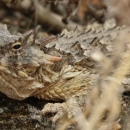
Coast horned lizard showing spikes along its neck, back, and head
The Carlsbad Fish and Wildlife Office is part of the U.S. Fish and Wildlife Service’s Ecological Services program. The ES program helps lead conservation across the nation and administers the Endangered Species Act. In April 2025, the Palm Springs Office merged with the Southern Nevada Office. All...
Landscape image of the Indian Peaks Wilderness in the summer; Storm Over the Continental Divide
The Colorado Ecological Services Field Offices have staff in Lakewood and Grand Junction who work with partners to restore and protect healthy populations of fish, wildlife, and plants, and the environments upon which they depend.
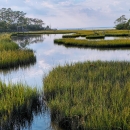
Patches of yellow-green emerge from the water while channels of water reflect a cloudy blue-grey sky.
Our vision is to collaboratively foster vibrant, healthy, abundant and self-sustaining resources within the Piedmont, Sandhills, and Coastal Plain by promoting nature based solutions. Congress has entrusted the Service to conserve and protect federal trust resources for the public's use and benefit...
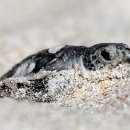
Green sea turtle hatchling in the sand
Serving Florida by conserving our most imperiled species and working with others to conserve plants, fish, and wildlife.
Two whooping cranes in a field
The U.S. Fish and Wildlife Service, Kansas Ecological Services Field Office is located in Manhattan, Kansas, in the northern Flint Hills. The office provides information related to at-risk species, threatened and endangered species, migratory birds, eagles, habitat and other natural resources...
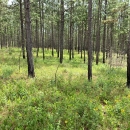
Long-leaf pine forest.
Serving Mississippi by conserving our most imperiled species and working with federal and state agencies, private landowners, and others to conserve plants, fish, and wildlife. The Mississippi Ecological Services office is the oldest field office in the country, first established in 1948.
Piping plover adult and chick on beach
The Montana Ecological Services Field Office coordinates with federal and state agencies, local governments, private and non-governmental organizations, and tribes to conserve, protect, and enhance fish, wildlife, plants, and their habitats within the state of Montana for the continuing benefit of...
A broad, calm, river, with trees on the far bank and blue skies above.
Welcome to the U.S. Fish and Wildlife Service Nebraska Ecological Services Field Office webpage! We are here to conserve, protect, and enhance fish, wildlife, plants and their habitats for the continuing benefit of the American people. We provide biological advice to the public, federal, and state...
Sierra Nevada bighorn sheep climb up a rocky ridge line with mountains in the distance.
The Reno Fish and Wildlife Office works with our partners to protect and conserve endangered fish, wildlife, plants, and their habitats in Nevada's Great Basin, the Eastern Sierra, and the Tahoe Basin for the continuing benefit of the American people.
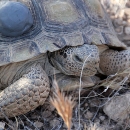
Desert Tortoise
The Southern Nevada Fish and Wildlife Office was established in 1995 primarily to work on recovery and regulatory issues related to the Mojave population of the threatened desert tortoise (Gopherus agassizii), and to help with efforts to conserve native desert fishes in southern Nevada. In April...
White fringeless orchid
The Tennessee Field Office is a leader in conserving Tennessee's imperiled species and their habitats, ensuring that sustainable populations of fish, wildlife, and plants continue to thrive for future generations.
A herd of elk in a snowy field and craggy mountains in the backdrop.
The Wyoming Ecological Services Field Office is responsible for conserving, protecting and enhancing federally protected fish and wildlife and their habitats in the State. The office seeks to carry out its responsibilities by working cooperatively with other Federal and State agencies, various...
a green meadow with hills in the background
The Yreka Fish and Wildlife Office (Yreka FWO) is an Ecological Services Office in Siskiyou County, northern California and located a few miles south of the Oregon border. Our office supports conservation work within the Shasta-Trinity and Klamath National Forests and adjoining private lands...
Media Usage Rights/License
Public Domain
Program
A rocky shoreline of a river. The water is calm. Mist and green branches line the river.
The Ecological Services Program works to restore and protect healthy populations of fish, wildlife, and plants and the environments upon which they depend. Using the best available science, we work with federal, state, Tribal, local, and non-profit stakeholders, as well as private land owners, to...